Frozen, Canned or Fresh Vegetables: What I Stopped Worrying About
I used to feel faintly guilty every time I reached for the freezer drawer instead of the produce aisle. Then I read up on what actually happens to vegetables between the field and the plate, and the guilt mostly went away.
 Hannah Caldwell 4 min read
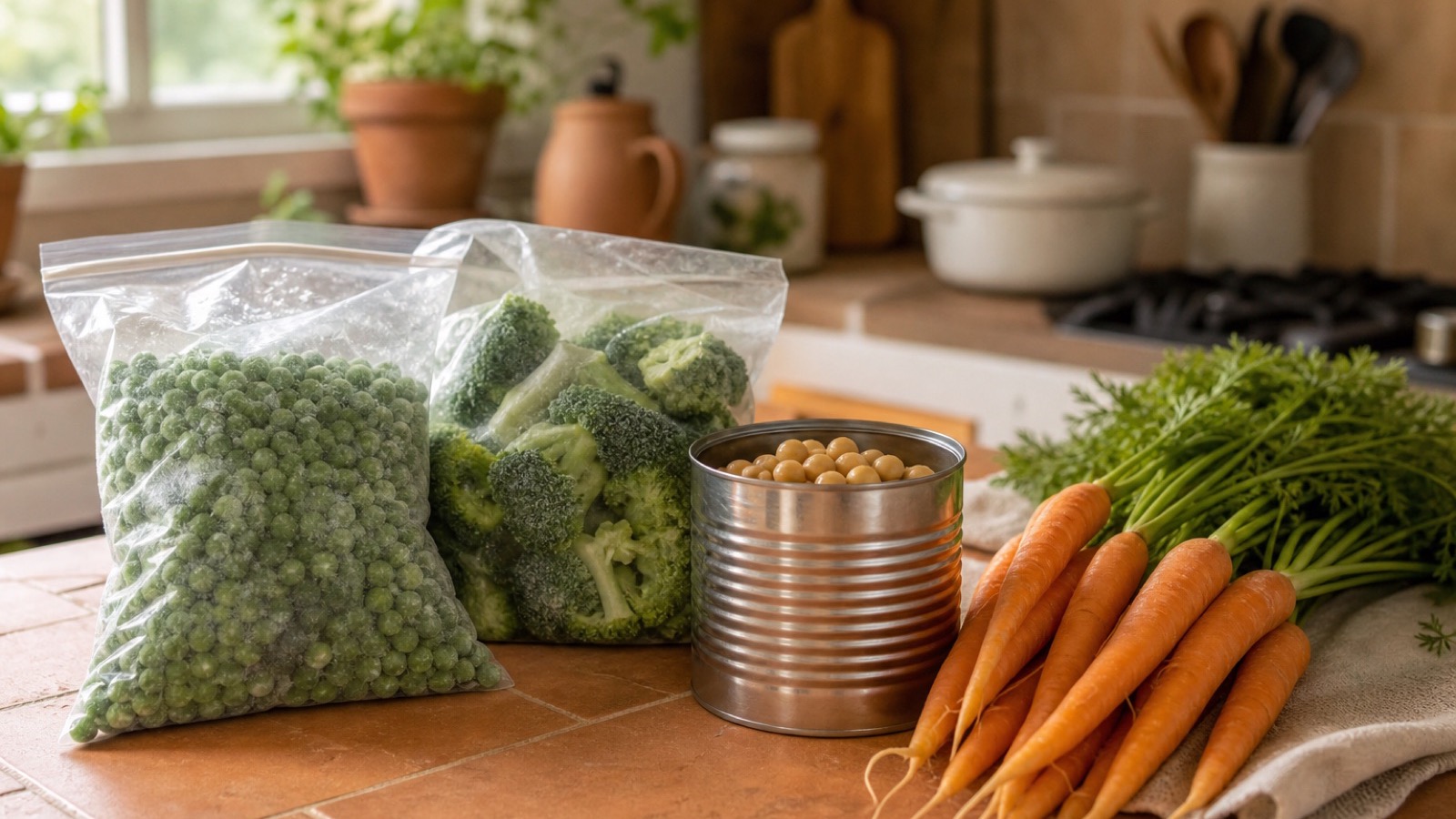
For a long time I had a quiet hierarchy in my head: fresh vegetables were the real thing, frozen were the compromise, and canned were what you ate when you’d given up. I never examined where that idea came from. It just sat there, making me feel slightly worse every time a bag of frozen peas saved dinner on a Tuesday.
So this autumn, while clearing out the freezer, I finally read up on it properly. What I found made the hierarchy fall apart.
(Usual note: I’m not a dietitian. I’m someone who cooks most nights and got curious.)
What “fresh” actually means by the time I buy it
The word fresh does a lot of work. A lot of the produce in a supermarket was picked days earlier, sometimes before it was fully ripe so it would survive the trip, then spent time in a warehouse, on a shelf and finally in my fridge. Some nutrients, vitamin C and folate in particular, slowly decline during that time, and how much depends on the vegetable and how it’s stored.
Truly fresh, picked-that-morning vegetables from a garden or a farmers’ market are wonderful. But the bag of green beans that’s been in my crisper drawer for six days is not the same thing, and I’d been giving it credit as if it were.
What happens to frozen vegetables
Vegetables meant for freezing are generally picked at peak ripeness and processed within hours. Most are blanched first, meaning a quick dip in hot water or steam that stops the enzymes that would otherwise dull their color and flavor in the freezer. Blanching does cost some water-soluble vitamins, mainly vitamin C and some B vitamins. After that, freezing largely holds things where they are.
The comparisons I read, including work from food scientists at the University of California, Davis, found frozen vegetables broadly comparable to fresh ones that had been stored for a few days, and in some cases ahead. That was the moment the guilt really started to lift.
What I like about frozen, practically:
- Nothing goes slimy. I waste a lot less, which matters to me as much as nutrition.
- Prep is done. Chopped spinach, broccoli florets and diced butternut squash go straight into the pan.
- Out-of-season vegetables are cheaper. Frozen berries and peas cost a fraction of their fresh equivalents in winter.
The one thing I watch for is sauces. Plain frozen vegetables are just vegetables. The ones sold in butter or cheese sauce are a different product with a different label, so I read it.
What happens to canned vegetables
Canning uses more heat for longer, because the can has to be safe at room temperature for a long time. That heat lowers some vitamins more than freezing does, and vitamin C takes the biggest hit. Textures get softer too, which is why canned green beans never won me over.
But a few canned foods are honestly some of the most useful things in my cupboard:
| Canned staple | Why I keep it around |
|---|---|
| Chopped tomatoes | Soups, sauces and chili; cooking actually makes the lycopene in tomatoes easier to absorb |
| Chickpeas and other beans | Protein and fiber with no soaking or hour-long simmer |
| Sweetcorn | Quick color in salads and fritters |
| Pumpkin puree | Autumn baking and the odd soup |
| Beets | Already cooked, which spares me the purple-hands situation |
The main catch is salt. Many canned vegetables and beans have salt added, and it adds up. One study found that draining and rinsing canned beans removed around 40% of their sodium, so I rinse beans every time unless the recipe needs the liquid. When I can, I buy the “no salt added” version and season it myself.
The way I think about it now
The best vegetable, it turns out, is the one I actually eat. A bag of frozen broccoli that ends up in tonight’s stir-fry beats a beautiful fresh head that goes yellow in the fridge while I’m busy. That’s not a profound idea, but it took me an embarrassingly long time to believe it.
So now my kitchen runs on a mix:
- Fresh for things I’ll eat within a few days and that suffer in the freezer: salad leaves, cucumbers, tomatoes for eating raw, herbs.
- Frozen for the reliable workhorses: peas, spinach, broccoli, green beans, mixed stir-fry vegetables and berries for breakfast.
- Canned for tomatoes, beans and pumpkin, rinsed when salted.
It made weeknight cooking easier, the way my budget roast veg traybake and the big pot of chili already had. And it fits the bigger lesson I keep relearning, the same one from sorting food into good and bad: the labels in my head were doing more harm than the food ever was.
A few questions I get asked
Are frozen vegetables as nutritious as fresh?
From what I've read, often yes, and sometimes more so than 'fresh' produce that has spent a week in transport and in the fridge. Vegetables for freezing are usually picked ripe and frozen within hours. Blanching costs a little vitamin C, but fresh produce loses some during storage too, so it tends to even out.
Should I rinse canned beans?
I do, almost always. Draining and rinsing canned beans has been shown to remove a big share of the added sodium, around four in ten milligrams in one study, and it costs nothing but ten seconds at the sink.
Are canned vegetables bad for you?
Not in my understanding of it. The heat used in canning lowers some vitamins, especially vitamin C, and many cans carry added salt. But canned tomatoes, beans, corn and pumpkin are still genuinely useful foods. I look for 'no salt added' versions when I can and rinse when I can't.
Last updated October 27, 2026.